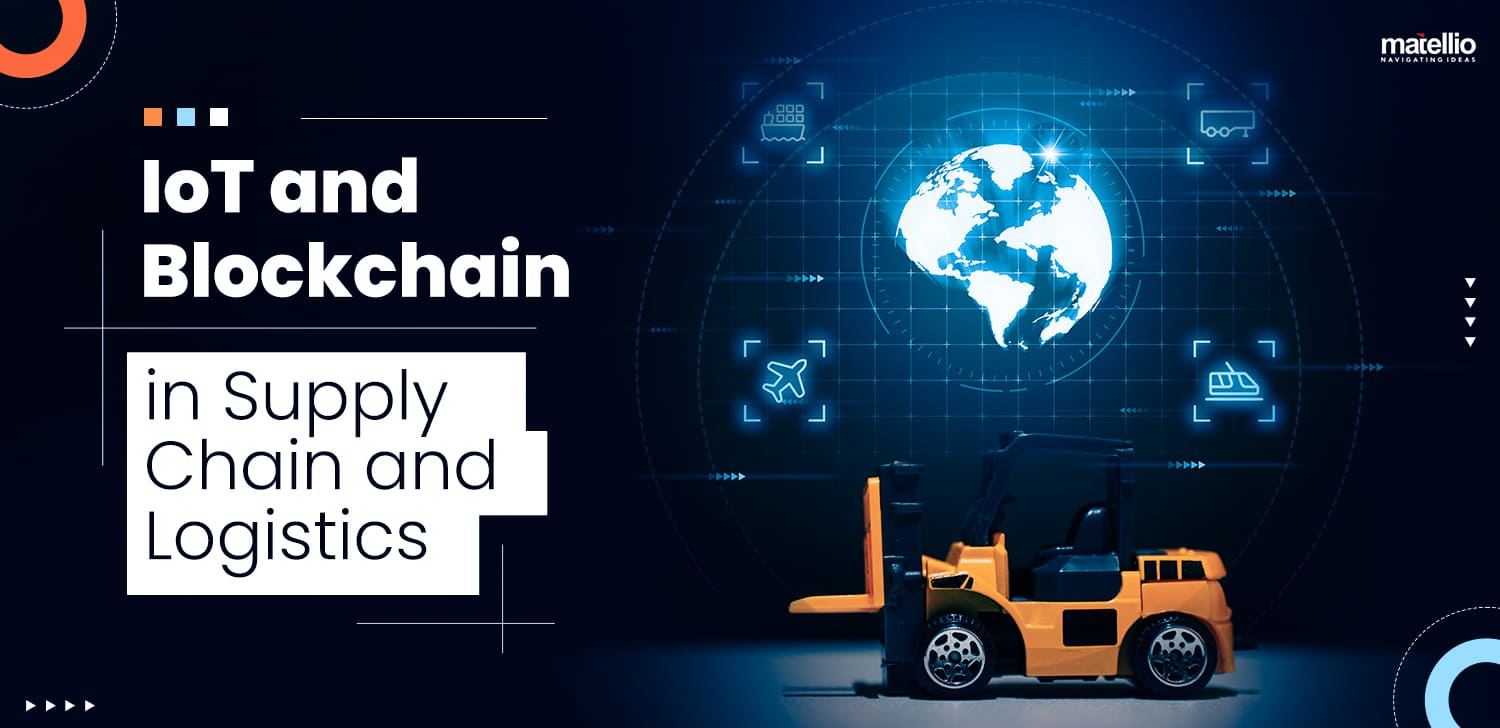
Blockchain and Emerging Technologies: Transforming the Future of Supply Chain Management
In the ever-evolving landscape of global commerce, supply chain management has become a critical factor in determining business success. As companies navigate the complexities of international trade, the need for transparency, efficiency, and trust has never been more urgent. Enter blockchain technology—a decentralized digital ledger that promises to revolutionize how goods are tracked, verified, and delivered. With its ability to create secure, transparent, and immutable records, blockchain is not just a trend; it’s a foundational shift in supply chain operations.
Integration with Emerging Technologies
Not long ago, blockchain was the hot new tech trend, underpinning innovations like cryptocurrency and NFTs. Now that blockchain has become more established, the next step in its evolution is integration with other technologies that are helping organizations improve their operations. Fortunately, AI, IoT, and other technologies offer capabilities that complement blockchain. By combining them, supply chains will benefit from better and more automated workflow documentation.
Blockchain and IoT Integration
IoT devices generate massive amounts of data. Think about, for example, IoT sensors on containers. Here’s how blockchain integration might work: A container with, say, fresh dairy has sensors that continually take temperature readings and track how long items have been in transit. The collected data is securely transmitted to a blockchain and stored on a distributed ledger across multiple nodes, ensuring immutability. Authorized participants in the blockchain can track the shipment with confidence. Meanwhile, smart contracts on the blockchain could be triggered by data events from IoT devices, automating actions or transactions, such as payment to a trucking company for getting fresh milk from dairy to plant quickly. This helps ensure product quality.
AI with Blockchain in Supply Chains
For more complex supply chains, AI excels at analyzing vast amounts of collected data to identify patterns; predict problems, such as equipment failure; and optimize processes based on real-time information. By combining AI’s predictive capabilities with blockchain’s secure data sharing, companies can improve the entire supply chain. Take our dairy delivery. AI could correlate data, such as the last time the cooling system was serviced along with a forecasted spike in temperature, to recommend using a different delivery vehicle. In addition, blockchain’s decentralized nature means it scales well, so it can provide timely data for analysis and for AI systems to use to trigger actions as milestones are met, such as sending notifications for delays or executing terms of smart contracts.
Blockchain and Future Technologies in Supply Chains
As it stands, blockchain offers new opportunities to enhance technologies like AI and IoT in supply chain management. New uses, such as the tokenization of goods, can create even faster transactions and greater transparency through digital representations of physical assets. Blockchain can empower consumers to learn about the products they purchase. Imagine enabling an end customer to scan a QR code on a product to access a detailed history on the blockchain, revealing the origin of materials and the carbon footprint of shipping, among other information.
Blockchain is already used to track currencies. For trading partners, it could facilitate secure peer-to-peer transactions, letting companies access financing on a decentralized platform and opening new expansion opportunities for smaller businesses.
Benefits of Implementing Blockchain in Supply Chain Management
Implementing blockchain technology in supply chain management can provide a range of benefits, including:
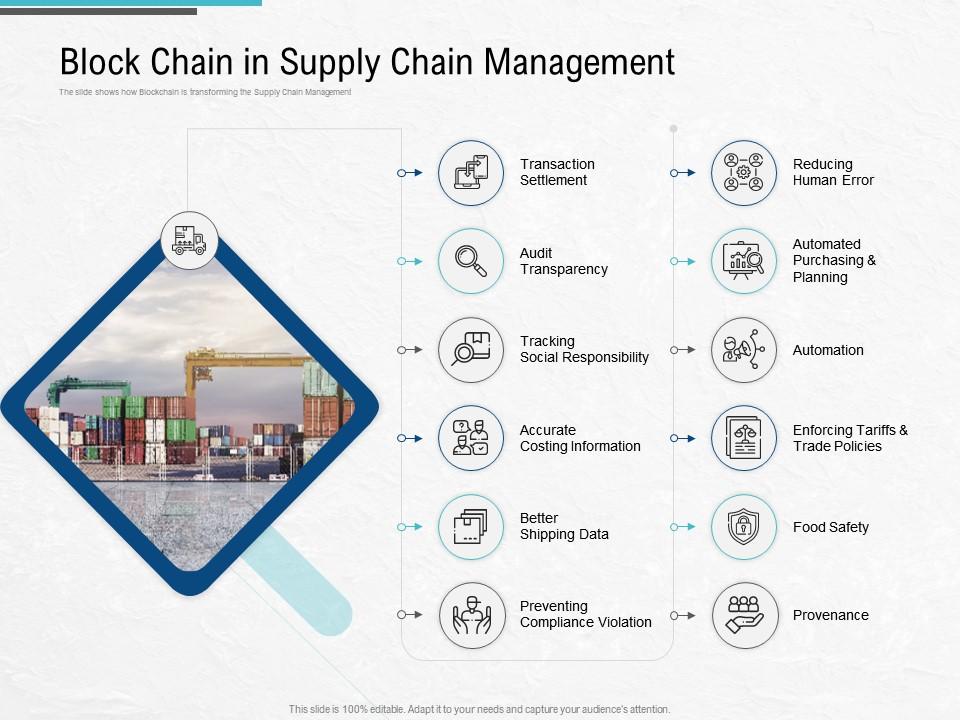
- Improved Traceability, Transparency and Trust: The key quality of the blockchain is the transparent and immutable record of all transactions within the supply chain. This facilitates the tracing of products from their origin to their destination, improves accountability and reduces the risk of fraud.
- Increased Efficiency and Speed: By automating many processes within the supply chain, blockchain technology can increase efficiency and reduce costs. This could include automating payments, tracking inventory levels, or streamlining logistics processes.
- Reduced Costs: Implementing blockchain technology can help reduce costs across the entire supply chain by eliminating intermediaries and reducing administrative overheads.
- Enhanced Security by Immutability: Blockchain technology is highly secure due to its distributed nature and use of cryptography. Immutability is one of the key features of blockchain technology.
- Better Customer Experience: Customers benefit from the use of the blockchain in SCM because businesses are able to deliver products faster and more accurately. Additionally, blockchain’s transparent nature allows customers to trace the origins of their products and track them through the supply chain.
Use Cases for Blockchain in Supply Chain Management
There are many potential use cases for blockchain technology in supply chain management. Here are some of the most promising applications:
- Traceability and Transparency: One of the biggest challenges for supply chain management executives is maintaining visibility across the network. Blockchain technology can help address this challenge by providing a secure and transparent way to track goods as they move through the supply chain.
- Environmental and Ethical Sustainability: Blockchain technology will be used to promote environmental sustainability by tracking carbon emissions and other environmental impacts throughout the supply chain.
- Quality Assurance: Blockchain technology can be used to ensure that products meet certain quality standards throughout the supply chain.
- Counterfeit Prevention: Brand and product piracy through counterfeit products is a significant problem in many industries, especially luxury goods and pharmaceuticals. Blockchain technology can help prevent counterfeiting by creating a tamper-proof record of product ownership and authenticity.
- Streamlining Payment Processing: Blockchain technology can also be used to streamline payment processing in supply chains. By using smart contracts, payments can be automated based on predefined conditions such as delivery confirmation or quality inspection.
Challenges and Limitations of Blockchain in Supply Chain Management
While blockchain technology offers many potential benefits for supply chain management, there are also several challenges and limitations that must be taken into account:
- Integration with Existing Systems: One of the biggest challenges for companies looking to adopt blockchain is integrating it into their existing systems.
- Cybersecurity and Data Privacy Concerns: Businesses must be aware of any security risks associated with the use of blockchain technology.
- Scalability Issues: The more companies use blockchain technology, the more the question of scalability arises.
- Legal and Regulatory Uncertainty: Since blockchain technology is still relatively new, there is some uncertainty around how it will be regulated in different jurisdictions.
- Cost Considerations: Finally, there are cost considerations associated with implementing blockchain technology in supply chain management.
Best Practices for Successful Implementation of Blockchain in Supply Chain Management
Despite the challenges, there are proven ways to successfully implement blockchain technology in supply chain management. Companies should follow these best practices:
- Identify Key Use Cases
- Follow Security Best Practices
- Analyse the Impact on Existing Systems
- Collaborate with Partners
- Choose the Right Blockchain Network
- Monitor Performance
By following these best practices, companies can successfully implement blockchain technology in their supply chains and reap its many potential benefits. One of the most important aspects is having the right technology partners or professionals on board to help guide them through the process of implementation. With their expertise, companies can ensure that their blockchain investments are successful and provide lasting value.
Future Outlook: How Will Blockchain Transform the Future of Supply Chain Management?
Blockchain technology has already begun to transform supply chain management, but its impact is only just beginning. Here are some projections of how blockchain will play into supply chain management in the future.
- Greater Adoption: As more businesses recognize the benefits of blockchain technology, we can expect to see greater adoption across the entire supply chain.
- Increased Integration with IoT: Talking about an interconnected ecosystem, the Internet of Things (IoT) is already being used in many supply chains to track products and monitor performance.
- Improved Sustainability: Europe will soon have mandatory reporting on environmental, social and governance (ESG) issues. Using the directive, the EU is aiming for a uniform and binding framework that will end greenwashing and strengthen the social market economy.
- Emergence of New Business Models: As blockchain technology continues to evolve, we may see entirely new business models emerge within the supply chain that take advantage of its unique capabilities.
In conclusion, blockchain technology is set to redefine the future of supply chain management. Its integration with emerging technologies like AI and IoT is paving the way for a more transparent, efficient, and sustainable global supply chain. As the market grows—projected to reach USD 17.15 billion by 2030—businesses that embrace this technology will be well-positioned to lead in the next era of global commerce.
Source Code & Aset Tersedia
File konfigurasi & database tutorial ini dapat diunduh langsung secara gratis.


