The Evolution of Cloud Computing: Understanding Infrastructure as a Service (IaaS)
In the rapidly evolving digital landscape, businesses are constantly seeking ways to optimize their operations, reduce costs, and enhance scalability. One of the most transformative developments in this space is Infrastructure as a Service (IaaS), a cloud computing model that has redefined how organizations manage their IT infrastructure. IaaS provides virtualized computing resources over the internet, offering unprecedented flexibility, cost efficiency, and control. As companies navigate the complexities of modern technology, understanding IaaS becomes essential for informed decision-making.
What is Infrastructure as a Service?
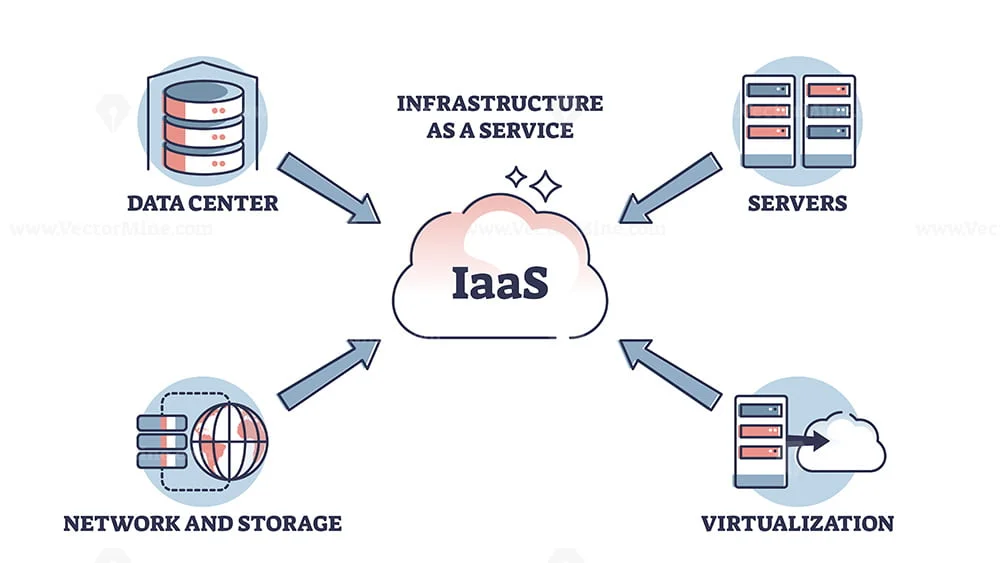
Infrastructure as a Service (IaaS) is a cloud computing service model that delivers virtualized computing resources such as servers, storage, and networking components over the internet. Unlike traditional on-premises infrastructure, IaaS allows organizations to outsource their entire IT infrastructure to cloud providers, enabling them to access and manage resources on-demand without the need for physical hardware. This model operates through virtualization technology, where physical hardware is abstracted into virtual resources that can be provisioned and scaled instantly based on user requirements.
The core components of IaaS include virtual machines, storage systems, networking hardware, and management software for provisioning and scaling resources. Leading cloud providers maintain data centers with thousands of physical servers, storage arrays, and networking equipment that are pooled together to create these virtualized resources accessible through web-based interfaces and APIs. This setup enables businesses to focus on their applications and services while the provider handles the underlying infrastructure.
Key Benefits of IaaS
One of the primary advantages of IaaS is its ability to reduce capital expenditures. By eliminating the need for upfront investments in physical hardware, organizations can convert fixed IT costs into variable operational expenses. This pay-as-you-go pricing model aligns costs directly with resource consumption, making it particularly beneficial for businesses with fluctuating workloads.
Another significant benefit is rapid scalability. Computing resources can be increased or decreased within minutes based on demand, allowing businesses to handle traffic spikes without over-provisioning hardware during quiet periods. This flexibility ensures that companies can respond swiftly to market opportunities and changing business needs.
Additionally, IaaS reduces the maintenance burden on IT teams. Cloud providers handle hardware maintenance, security patches, and infrastructure updates, allowing IT staff to focus on applications and business logic rather than managing physical equipment. This shift not only saves time but also minimizes the risk of downtime and other technical issues.
Global accessibility is another key advantage of IaaS. Resources are available from multiple geographic locations through internet connections, enabling teams to access infrastructure from anywhere. This supports remote work and distributed operations, making it easier for businesses to operate across different regions.
Disaster recovery is also enhanced with IaaS. Built-in backup and redundancy features protect against hardware failures and data loss. Many providers offer automated failover systems that maintain service availability during outages, ensuring business continuity even in the face of unexpected challenges.
Common Use Cases for IaaS
IaaS is widely used across various industries and scenarios. Development and testing environments are one of the most common use cases, where organizations quickly spin up isolated environments for software development and testing without purchasing dedicated hardware. Teams can create multiple test environments that mirror production systems, then destroy them when projects complete.
Disaster recovery and backup are also critical use cases. Companies deploy IaaS resources as backup infrastructure that activates when primary systems fail. This approach costs less than maintaining duplicate physical data centers while providing reliable failover capabilities.
Web hosting and applications benefit significantly from IaaS. Businesses host websites, web applications, and databases on IaaS platforms to handle traffic spikes and scale resources automatically. E-commerce sites, for example, can manage seasonal peaks without the need for extensive hardware investments.
Big data processing is another area where IaaS shines. Organizations use IaaS to access powerful computing resources for analyzing large datasets without investing in expensive hardware. Data scientists can provision high-memory instances for machine learning models, then release resources when analysis completes.
Seasonal workload management is another common use case. Companies with fluctuating demand patterns deploy IaaS to handle peak periods without maintaining excess capacity year-round. Tax preparation firms and retail businesses commonly use this approach during busy seasons.
Geographic expansion is also facilitated by IaaS. Businesses use IaaS to establish an IT presence in new markets without building physical infrastructure. Organizations can deploy resources in different regions to serve local customers with better performance and compliance.
Legacy system migration is another important use case. Companies move aging on-premises systems to IaaS platforms to extend their lifespan while planning modernization. This approach reduces maintenance costs and improves reliability without requiring immediate application rewrites.
Choosing the Right IaaS Provider
Selecting the right IaaS provider involves evaluating several critical factors. Performance requirements, security standards, pricing models, scalability options, support quality, and integration capabilities are all important considerations. Organizations should define their specific performance requirements, including CPU power, memory, storage speed, and network bandwidth. Testing different instance types during free trials can help measure actual performance against workloads.
Security and compliance features should also be evaluated based on industry requirements. Certifications like SOC 2 and ISO 27001, as well as industry-specific standards such as HIPAA for healthcare or PCI DSS for payment processing, are essential for ensuring data protection.
Pricing models should be compared across providers by calculating the total cost of ownership, not just hourly rates. Including costs for data transfer, storage, backup services, and support plans is crucial, as these can add 30-50% to base compute costs.
Assessing scalability options, including auto-scaling capabilities, geographic availability, and resource limits, is also important. Verifying that the provider can handle peak demand periods and offers regions close to users for optimal performance ensures that the solution meets current and future needs.
Testing customer support quality by submitting technical questions during the evaluation period helps determine response times, technical expertise level, and availability of phone support versus ticket-only systems.
Finally, verifying integration capabilities with existing tools and systems ensures that the provider offers APIs, monitoring tools, and management interfaces that work with current DevOps workflows and security tools.
Conclusion
As businesses continue to embrace digital transformation, the role of IaaS in shaping modern IT infrastructure cannot be overstated. Its ability to provide flexibility, cost efficiency, and scalability makes it an attractive option for organizations of all sizes. Whether it’s supporting development and testing environments, enabling disaster recovery, or facilitating geographic expansion, IaaS offers a robust foundation for innovation and growth. By carefully selecting the right provider and leveraging the benefits of IaaS, businesses can unlock new possibilities and stay competitive in an ever-changing digital world.